Cognitive
Agriculture
Treating farms as intelligent systems capable of sensing, adapting, and regenerating.
Swiss vineyards carry a mounting bill every season.
Labour, machinery, land lease, plant protection, insurance and inputs: CHF 33,000 to 55,000 per hectare.
Lab testing, sensors and agronomy consulting add CHF 2,000 to 6,000 on top, and the number grows every year.
Every new tool arrives with its own supplier, its own invoice, and takes more of the grower’s time.
None of them is accountable for the harvest.
Analytical labs want growers to buy more tests. Consultants want more hours. Input suppliers want more fertiliser and spray applied. Digital agronomy companies want subscriptions and sensors the grower has to buy.
Chemical strategies are losing effectiveness as mildew and botrytis pressure intensifies. Soil fertility declines, margins shrink, and growers spend more each season for the same result.
The grower is expected to function as their own data scientist, agronomist, buyer and coordinator, while also managing the vineyard.
Modern agriculture is built around control.
It treats the farm as a set of inputs and outputs. Fertilizers, pesticides, and water are applied based on fixed schedules or broad assumptions. If something goes wrong, more inputs are added.
But living systems don’t respond well to control. They respond to attention. To timing. To context. Trying to force a biological system to behave like a machine leads to unintended consequences: soil degradation, declining yields, and ecological stress.
AGROSTASIS
™Built to collaborate with a living system rather than control it
The first agentic platform for agriculture. It continuously senses, models, acts, and adapts to keep the field in balance as conditions change.
Every instrument sees part of the field.
A soil panel, a sap test, a moisture probe and a satellite pass each measure a few variables, at their own cadence, with their own noise.
AGROSTASIS treats each one as a partial observer of the same field. For every instrument the model computes what it sees and how much of what it records is driven by things it cannot see.
New instruments, including microscopy and field imaging, join as new observers without changing the rest of the model.
- Soil / Plant assayschemical · genomic · enzymatic
- Geospatialsatellite · LiDAR · NDVI
- Imagerydrone · camera · autonomous microscope
- Environmentweather · leaf/soil temp · RH
- In-field sensorsphotonic · moisture · electrophysiology
The Field State Model
The Field State Model is a probabilistic model of a field’s soil and plant states. Soil chemistry, microbial community, enzyme activity, soil structure, water and plant physiology are held in one state and updated daily from every measurement.
For every variable it gives a best estimate and how uncertain that estimate is. Uncertainty grows for anything not measured recently and narrows the moment a new reading arrives.
It learns which variables are correlated and which drive which. Every link starts as a hypothesis and is kept only if the data support it, so the field’s subsystems are discovered, not assumed.
A season clock driven by thermal time places the field in its biological year, so a normal autumn decline is not read as degradation.
Running on simulated seasons
Agents built on active inference.
Active inference describes how living systems act under uncertainty: hold a belief about the world, act to move it toward a preferred state, and seek the observations that reduce uncertainty most.
The AGROSTASIS agents, designed by Lazy Dynamics, work the same way. Each possible measurement is scored by how much it will reduce uncertainty about the field on the day its result arrives, weighed against its cost and delay. Inputs are planned toward the field’s healthy state.
- Sampling Agentwhat to measure next to reduce uncertainty & obtain the highest-quality dataMVP · Lazy Dynamics
- Input Agentwhen & where to apply fertiliser, water, organismsIn development
- Automation Agentplans & orchestrates the work on the groundIn development
Every action teaches the model.
After each intervention the field is measured again. The model learns how each input moves the field, and whether the move held.
Learning runs at separated speeds: the state updates with every reading, the couplings daily, the structure monthly and at season end. What healthy means starts from agronomic reference ranges and is learned from this vineyard’s own outcomes.
We’re an asset manager
for the land.
One contract. Swiss Soil takes responsibility for every part of fertility and biological management: sampling, lab coordination, interpretation, input formulation and field application.
Approximately CHF 10,000 to 12,000 per hectare per season. The price replaces what growers already spend across six suppliers rather than adding to it.
Growers need no hardware, software subscriptions or vendor coordination.
The serviceBefore: six categories of spend on one hectare. After: one contract under management.
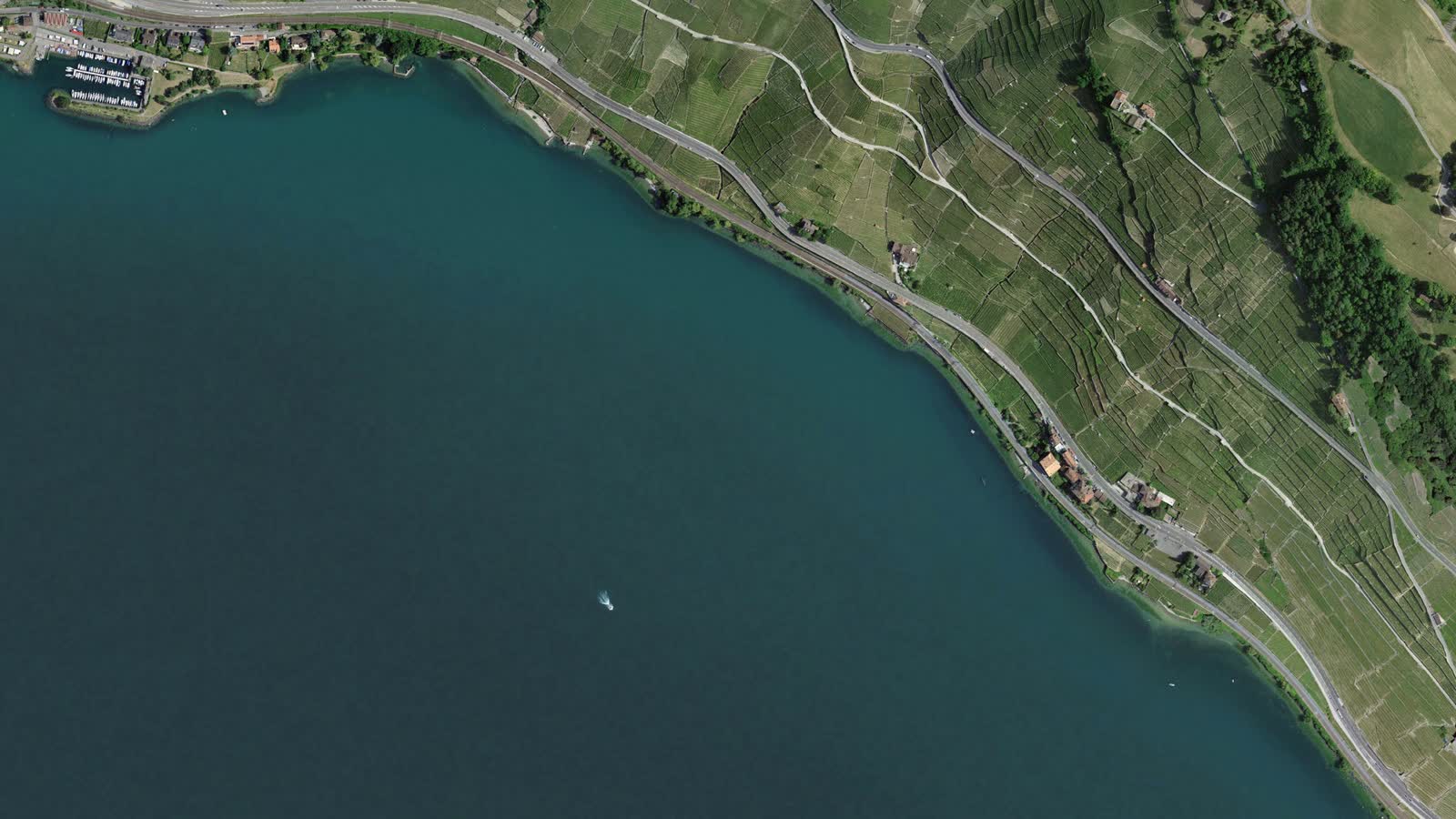
The agronomic case is being built over two field seasons on a working vineyard in Vaud.
AGROSTASIS on a working vineyard in Vaud.
An Innosuisse innovation project with Changins and Lazy Dynamics. For two growing seasons, AGROSTASIS manages vineyard hectares in Vaud, measured against control hectares managed as usual.
Changins analyses the vines’ sap chemistry and the soil’s microbial life. Lazy Dynamics builds the active-inference agents. Swiss Soil runs the field work and fits the Field State Model to real field data.
The pilot generates the agronomic evidence base required to deploy the AUM service at scale.






Talk to
Swiss Soil.
Growers, cooperatives and research partners who want to know what Area Under Management would mean for their vineyard, or who want to follow the Cognitive Vineyard project, can write to us directly.
contact@swisssoil.com